Resources to Explore For Future Use:
- I enjoyed seeing the environment in Google Earth Pro and I want to find ways to use it in a science classroom. It may be helpful for exploring different biomes.
- I am also going to explore Common Sense Education for my group tech project and other projects. It seems like it would be a good tool for analyzing apps in a reasonable amount of time before recommending them to the class. There are also free lessons, game recommendations, and articles.
- I will look further into the 5 Rs of Indigenizing online learning: Respect, reciprocity, relevance, responsibility, and relationships. I found a research article from 2018 on this concept.
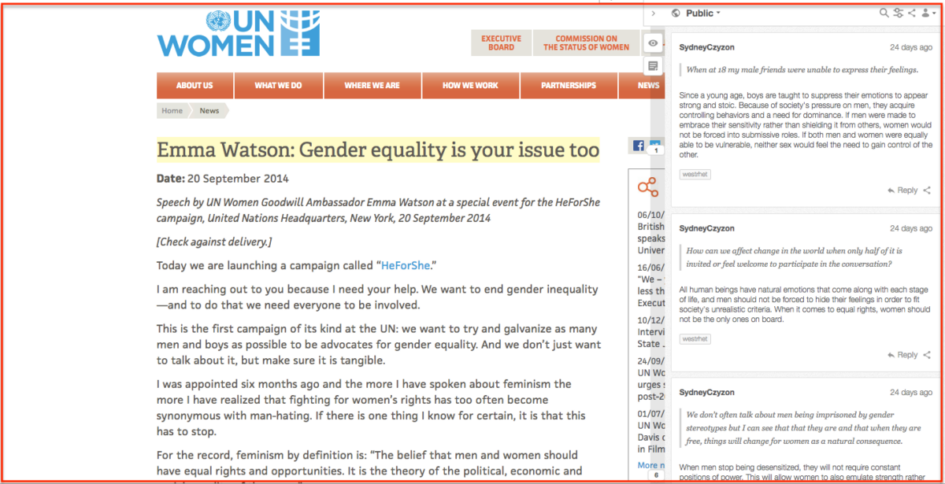
- The site called Hypothesis seems useful as well. You can comment or annotate over a webpage as if it were a pdf. We can do it as a group in class and you can look at comments from others who used the program. For a science class we could look at research articles and walk through them together. This may help with introductions to research papers and the like. The Hypothesis website has a few classroom use guides.
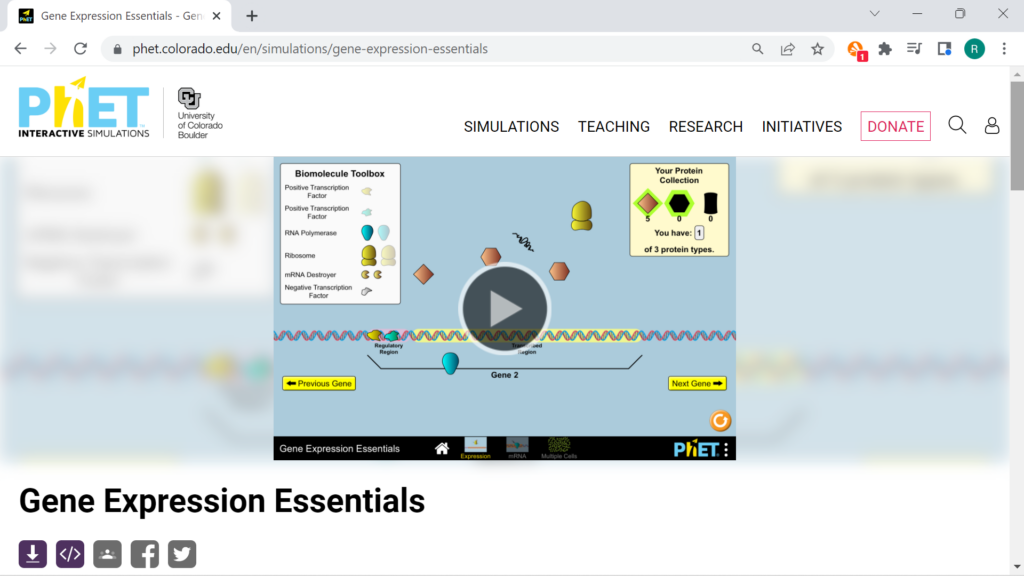
- I also want to look into PhET Interactive Simulations further. Some simulations have features to increase accessibility, such as the text being read out loud by the computer. I will try some of these to judge if I would like to use them in my classes.
______________________________________________________________________________________________
I had some positive and negative experiences with online learning. Overall, I am feeling confident screencasting a lecture, but I need to practice editing. I enjoyed being able to rewatch videos and take in the information at my own pace unlike having to frantically write notes. I also like being able to read other student’s discussion answers online. Many of the in class discussions that I’ve been a part of end before everyone gets a chance to say their opinions. I also like getting more time to think about my answer before writing it down. I understand that fast responses are useful, but I would like a mix of the two. The use of the Google Jamboard also allowed us to see multiple groups’ answers for the same topic almost side by side.
It was interesting to hear how different people viewed online learning and what aspects they thought could be asynchronous or synchronous. I felt that some could easily be made both ways depending on what your focus is and how the class responds to things.
The discussion about designing assessments to limit cheating was also thought provoking. I found that some of my professors switched their tests to being more short answer and open-ended and possibly making it open-book. I feel I may try the same thing if needed. This also may make it easier for verbal responses, as it could be like a stream of consciousness answer. I found the idea of running an exam that requires very strict measures such as recording the room the students are in to be too intrusive and uncomfortable. I am also curious about group quizzes and group tests, as I recently saw one being done in a math classroom in which students could ask any other student in class for help. It seemed to go well for some blocks, but some groups struggled to stay on task while sitting with their friends. I feel that if this were done in breakout rooms on zoom, a similar lack of focus could happen when the teacher wasn’t observing their group. So in that sense, it’s not too much different than in person, but the students would have access to the internet as well.
Leave a Reply
You must be logged in to post a comment.